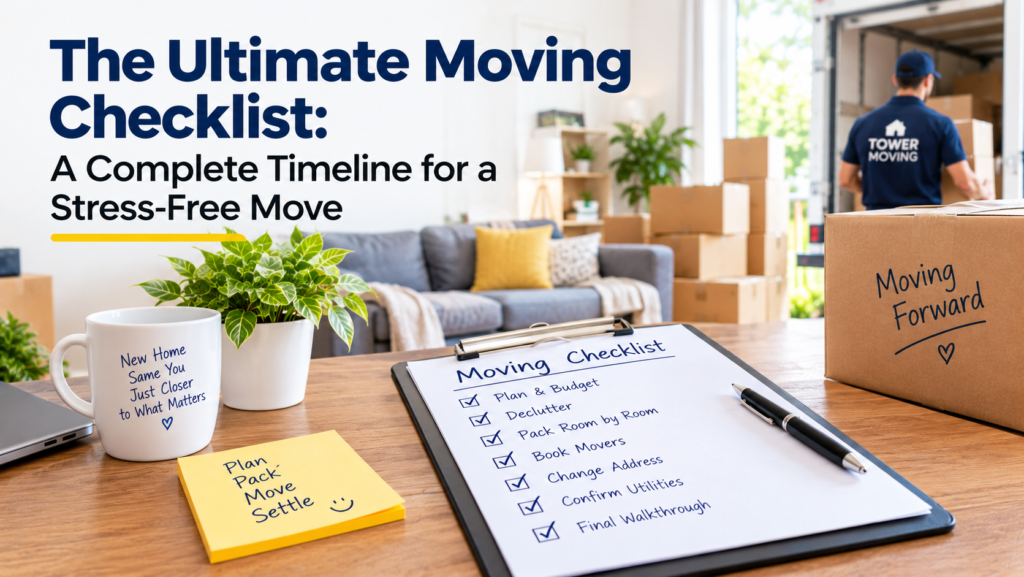
Moving to a new place, especially across town, can feel overwhelming. It is easy for the day to get out of control if you do not plan ahead. A good option is to use a clear eight-week plan. Each week can focus on smaller tasks you can finish.
A solid moving checklist also helps a lot. Use it to sort your things early. Make sure you line up dependable movers ahead of time. Pack one room at a time instead of trying to do it all at once. This cuts down on stress when moving day finally arrives.
At Tower Moving, we work with people and families through the full process. We handle steps such as careful packing and safe transport. This guide covers the key tasks you need to complete before moving day, on moving day, and after you are in the new home.
Planning Your Move Eight Weeks Before the Big Day
Plan about eight weeks ahead so things stay in your control. You will also have breathing room to deal with small tasks. Start with a full sweep. Check each closet. Look in the basement corners. Search the attic too. Pull out things you no longer use. Also set aside items you do not need. When you donate clothes or get rid of extra furniture, you usually end up with less to move. Less stuff means fewer boxes. That can lower what you pay for the truck.
Next, ask moving companies for written quotes. Make sure each company is licensed. Choose the day you want and then match the booking to the quotes you get. If you book earlier, you can often dodge the busiest summer pricing. It can also be easier to line up the right crew. This matters even more when you need a weekend move.
- Declutter room by room to donate or sell unwanted household items
- Request detailed moving estimates from top-rated local moving companies
- Create a physical or digital folder to track all moving receipts
- Measure large furniture pieces to see if they fit through new doorways
Securing Supplies and Utility Services Four Weeks in Advance
One month left means you should handle the key moving jobs. Start by getting your packing supplies. Pick strong cardboard boxes, use heavy tape, and set aside bubble wrap. Also get permanent markers so you can label each box in a clear way.
These moving tips help keep fragile glass from breaking. They can also make unloading go faster once you reach the new home.
This is a good time to shift your home services. Call your electric, gas, water, and internet providers. Ask them to note the dates for turning off and turning on. Do this ahead of time so you do not end up paying for two places at once. You will also have power and hot water when you arrive at your new address.
- Purchase quality packing boxes, bubble wrap, and heavy packing tape
- Label every box clearly with its target room and general contents
- Schedule utility transfer dates for electricity, water, and home internet
- Submit an official address change request with your local post office
Want to discover how professional moving services can take the heavy lifting off your shoulders on moving day?
Explore Reliable Moving Options!
Organizing Household Items Two Weeks Before Loading Day
About 2 weeks before moving day, pack the stuff you do not use every week. That can include seasonal clothes, wall decor, and specialty kitchen tools. Make sure tables and floors are cleared out. You will need open space to sort items and place boxed goods without squeezing them. If you live in an apartment building, check with the building manager to reserve an elevator. This helps the movers get in without delays.
When you move to a home, keep the packing in order room by room. This reduces mix-ups and helps protect fragile items. Also handle a few outdoor items ahead of time. Drain any gas in lawn equipment and break down large patio sets.
Handling Last-Minute Prep One Week Prior to the Move
With only seven days left, finish packing the remaining rooms and prepare an essential overnight bag for every family member. Pack daily toiletries, comfortable clothes, basic medicines, phone chargers, and vital personal documents in these special bags. Keep these emergency bags inside your personal car so they never get mixed up with general moving truck boxes.
Plan to defrost the fridge and freezer at least 24 hours before the movers show up. Give yourself time to thaw everything fully so water does not make a mess later. After that, wipe the inside shelves. This helps prevent mold and reduces bad smells while the units are being moved.
- Pack essential overnight bags with clothes, medicines, and phone chargers
- Defrost and clean your kitchen refrigerator and freezer completely
- Set aside important legal papers, passports, and medical records
- Confirm final arrival times and address details with your moving crew
Sign up for a personalized moving plan that suits your specific needs
Conclusion
Following a structured moving checklist transforms a confusing home transition into a simple, step-by-step process. By starting your preparations early and hiring dependable help, you protect your possessions and keep your moving day on track. Working with an experienced partner like Tower Moving makes sure your residential moving experience stays stress-free from start to finish.
FAQs
Why is following a moving checklist so important when changing homes?
Using a clear moving list makes it easier to handle tasks one by one for weeks. It can stop the rush that happens when the move day is close. You may also avoid extra charges and keep papers in good shape while they travel. A written plan helps you get the services switched at the right time. It also helps with elevator reservations.
How far in advance should I start packing up my house?
Start sorting and packing stuff you do not need for a move about six to eight weeks ahead. Put away seasonal clothes, books, and extra home decor first. That early work clears room so you can build boxes more easily. Keep your everyday items for later. Save things like kitchen items and toiletries for the last week. This way your home can run as usual until moving day.
How can I lower my overall moving costs before hiring movers?
You can cut your moving costs if you clean up your home before you request quotes. Go through your place and get rid of things you do not need. Sell extra furniture, give away old clothes, and toss out broken items. This lowers how much weight you ship and how many boxes you need. You can also save money by using your own strong boxes. Pack the items that are not fragile yourself. Doing this reduces the amount of work the movers must do on moving day.
What essential items should go into an emergency moving day bag?
Your emergency bag is for the first day after you move into a new place. Put in the stuff you might need right away. Choose clothes that fit and feel comfortable. Add basic toiletries and daily medicines. Do not forget phone chargers. Bring toilet paper too. Include a few simple hand tools and pack your key documents. Keep things like personal papers, passports, and lease papers in the bag.
What are the main benefits of hiring professional residential movers?
Movers come with the right tools for the job. They carry things that help move heavy items without damage. They also use soft padding and thick furniture blankets. Packing is handled by people who have done it before. During the move, they work around narrow stairs and tight hallways. Doorways can be awkward, especially with bulky furniture.