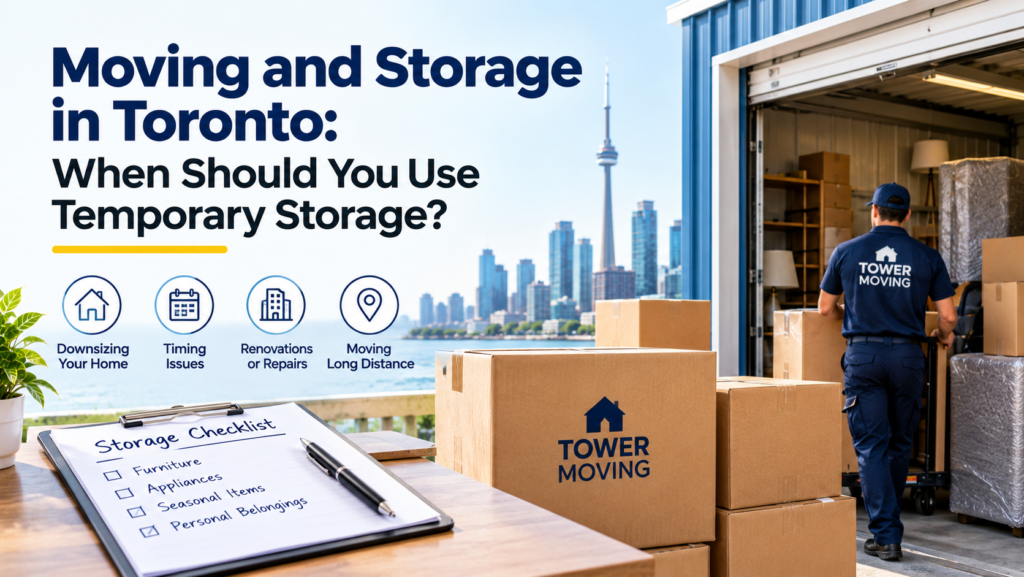
Moving to a new house is never simple, and sometimes things happen before your house is ready. Sometimes things happen in life that require you to find temporary space. For situations like these, there is always temporary storage. Moving storage in Toronto is a great option when you need to find space for all your belongings, and you know where your next home will be.
This guide explores moving and storage needs and the optimal use of temporary storage. It provides a quick guide to understanding what can be stored and how to best organize your move. Tower Moving helps you determine what to look for when choosing a storage company, with a focus on simplicity.
When Should You Use Temporary Storage?
Temporary storage is useful when your moving plans have a gap. You may need to leave your current home before your next one is ready. Instead of rushing to find space for every box, you can store your items until moving day arrives.
Here are some common times when temporary storage can help.
1. Your New Home Is Not Ready
Sometimes, a closing date changes, repairs take longer, or your new home needs more work. You may need to leave your current place before you can move into the next one.
A storage unit gives your furniture and boxes a place to stay. You can move your items out on time and arrange delivery when your new home is ready. This helps you avoid rushing into a short-term rental just to hold your belongings.
2. You Are Between Homes
Some people move into temporary housing while looking for a new home. Others stay with family during a job change or a home renovation. In these cases, carrying every piece of furniture into a small space can create problems.
You can keep larger items in storage and take only the things you need each day. This makes a temporary home easier to manage. It also saves you from moving the same furniture into several places.
3. You Are Renovating Your Home
Home repairs can create dust, mess, and limited space. Large furniture may get in the way of workers or become exposed to paint and other materials.
Moving your belongings into storage clears the work area. It also gives you more room to complete repairs without moving items from one corner to another. You can bring everything back once the work is done.
4. You Need More Space During a Move
A move can involve more than one trip. You may want to move a few rooms first and handle the rest later. Storage can help when your schedule or available space makes a single move difficult.
With storage Toronto options, you can hold extra furniture, seasonal items, and packed boxes until you have room for them. This works well when you are downsizing or moving into a smaller apartment.
How Temporary Storage Makes Moving Easier
Temporary storage gives you more control over your moving dates. You can plan around your home closing, work schedule, or renovation timeline. You also get more room to sort your belongings before everything enters your new home.
It can help you in a few practical ways:
- Less clutter: Keep extra furniture and boxes out of your way.
- More time: Sort your belongings at a pace that suits your schedule.
- Better planning: Move items when your new home is ready.
- A clearer space: Keep walkways and work areas free during repairs.
- Fewer rushed choices: Avoid trying to fit every item into a temporary home.
Think about what you will need during the storage period. Keep daily items, important papers, medicine, and valuables with you. Pack the rest carefully and label each box clearly.
What Should You Check Before Choosing Storage?
The right storage plan depends on how much you own and how long you need the space. Check a few key details before making a booking.
Storage Size and Cost
Make a list of the furniture, boxes, and other items you plan to store. Ask the provider which unit size fits your load. A unit that is too small can make access difficult, while a much larger unit may cost more than you need to spend.
Ask for a clear price breakdown. Check the rental period, payment terms, extra fees, and charges for moving items in or out. This helps you understand the full cost before you agree.
Safety and Access
Ask how the facility protects stored belongings. Check its access rules, security features, and policies for handling your items. Find out whether you can visit the unit during the rental period and how much notice you need to give.
For household storage in Toronto, ask about temperature and moisture control if you plan to store wooden furniture, electronics, or other items that may react to damp conditions. Good packing also matters. Clean and dry your belongings before storage, and use suitable covers and boxes.
Packing and Moving Help
Moving heavy furniture into storage takes time and care. Professional movers can help carry, wrap, and load items safely. Ask whether the service includes transport to storage and delivery to your new home.
Keep an inventory of everything you store. Take photos of valuable items before packing them. These simple steps help you track your belongings and check their condition later.
How Long Should You Keep Items in Storage?
The right storage period depends on your situation. A short renovation may need only a few weeks, while a delayed home purchase may take longer. Ask the provider about minimum rental periods and how extensions work.
Try to get a rough timeline before booking. If your dates are uncertain, ask about flexible terms and the cost of keeping your items longer. Check the unit from time to time if your agreement allows it. This gives you a chance to review your plans and remove items you no longer need.
If you expect a long delay, think carefully about the cost. Storing low-value items for many months may cost more than replacing or selling them. Compare your options before making a final choice.
How to Prepare Your Belongings for Storage
Good packing helps protect your items and makes unpacking easier. Start by sorting your belongings into three groups: items to keep, items to donate or sell, and items to store.
Clean furniture and allow it to dry before covering it. Use strong boxes for heavy items and lighter boxes for fragile belongings. Wrap glass, dishes, and other breakable items with suitable packing material.
Label each box on more than one side. Write a short list of its contents so you can find things later. Keep screws and small parts in labelled bags, and attach them to the right furniture where possible.
Avoid storing food that can spoil, wet items, or anything the facility bans. Ask about rules for batteries, chemicals, and other items that may pose a risk. Keep passports, cash, personal records, and essential medication with you.
Conclusion
Temporary storage can make a move easier when dates change, repairs run late, or your new home lacks space. It gives you time to plan and helps keep your belongings in one place until you need them again.
If you are planning moving storage in Toronto, compare storage size, costs, access rules, and moving support before booking. Think about how long you need storage and what items require extra care. Tower Moving can help you explore moving options, including local moving and storage support, so you can plan your next step with greater confidence.
FAQs
1. When should I use moving storage in Toronto?
You should consider temporary storage when your move-out date comes before your new home is ready. It can also help during renovations, downsizing, or a stay in temporary housing. You can store furniture and boxes until you have enough space to unpack. Before booking, check the rental period, total cost, access rules, and the care your belongings may need.
2. How much does temporary storage usually cost?
The cost depends on the unit size, rental period, location, and services you choose. Moving help, packing supplies, and delivery may add to the total. Ask for a written estimate that lists regular charges and possible extra fees. Compare the full price across a few providers, and check whether the agreement includes a minimum rental period or charges for late payment.
3. What items can I keep in a storage unit?
Many people store furniture, clothing, books, kitchen items, and packed household goods. Clean and dry each item before packing it, and use strong boxes for safe handling. Some facilities restrict food, fuel, chemicals, plants, or other risky goods. Ask for the full list of banned items before moving anything into the unit. Keep important documents and daily essentials with you.
4. How do I protect furniture during temporary storage?
Clean furniture before placing it in storage, and let it dry fully. Use suitable covers to protect surfaces from dust and scratches. Pack smaller parts, such as screws, in labelled bags and keep them with the right item. Ask about moisture control and safe loading methods. Check your storage agreement for rules about wrapping materials and the care of stored belongings.
5. Is short-term storage useful during a home renovation?
Short-term storage can help clear rooms before repair work begins. You can move sofas, tables, boxes, and other items away from dust, paint, and busy work areas. This also gives workers more room to move around safely. Before the project starts, ask your contractor which areas need to stay clear. Choose a rental period that fits the expected work schedule, with room for delays.