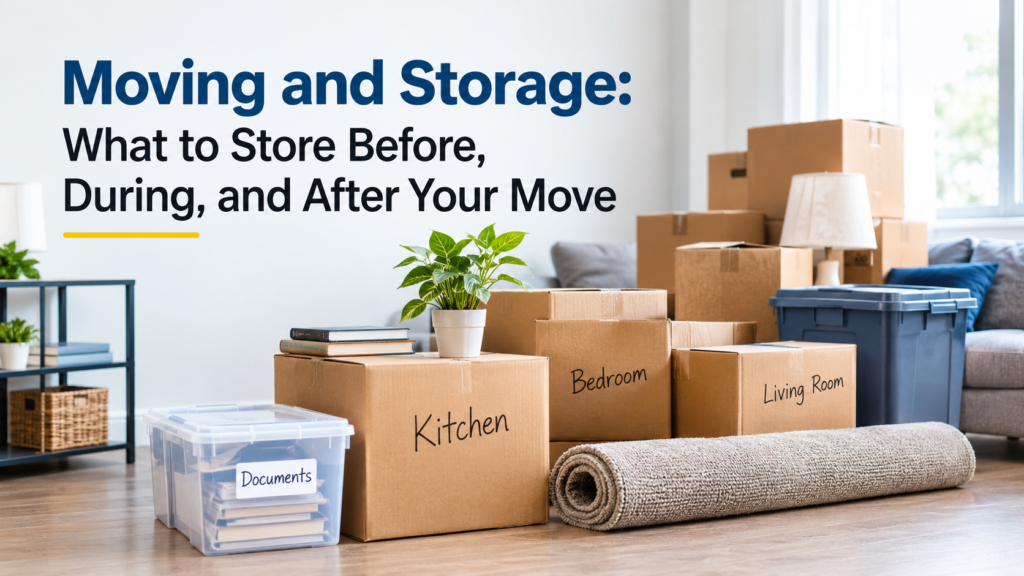
Handling a household move gets easier when you put non-essential items into temporary storage early on. People store seasonal clothes, extra furniture, garage tools, and personal records before, during, and after relocation to keep homes clear. Using moving and storage solutions gives you immediate space to clean your old house, stage rooms for buyers, and unpack your new home without stress. At Tower Moving, we help families coordinate truck loading, transit times, and secure warehouse space without hassle. This guide breaks down exact items to tuck away during every phase of your move.
Items to Store Before Your Moving Day Arrives
Clearing clutter early helps real estate agents show your property to eager buyers. Start by packing up winter coats, heavy boots, beach gear, and extra patio chairs weeks ahead of time. Professional storage facilities offer clean spaces to keep these bulky containers out of your hallways.
Remove heavy furniture pieces like guest beds, extra coffee tables, and large bookcases to make rooms look bigger. Put off-season sports gear and old holiday decorations into plastic totes and ship them off to your unit. In addition, packing non-critical items early cuts down on last-minute packing chaos.
- Pack away seasonal clothing, winter coats, and extra shoes in plastic totes
- Move extra living room furniture to open up floor space for house showings
- Store bulky holiday lights, artificial trees, and lawn ornaments early
- Clear out garage clutter like lawnmowers, sports gear, and spare tires
What to Hold in Units During the Actual Transition
Transition days often bring unexpected gaps between closing sales and picking up keys to your new house. Holding core items inside temporary units keeps your beds, clothes, and kitchen dishes safe while paperwork clears. Choosing short-term storage keeps your belongings locked up tight while you stay at a hotel or family home.
Keep extra boxes, spare mattresses, and secondary furniture packed away inside secure vaults while moving trucks travel. This setup gives you complete freedom to clean carpets or repaint interior walls before big furniture lands in living rooms. Thus, keeping extra items off your main truck simplifies your arrival day.
- Keep secondary bedroom sets locked away until primary rooms get painted
- Store extra kitchen appliances and backup dish sets during house painting
- Hold spare office desks and filing cabinets until you organize your workspace
- Keep boxed books and media collections packed while floorboards dry
Smart Options for Storing Possessions After Unpacking
Unpacking every single box right away creates messy rooms and heavy fatigue after long drives. Keep home renovation tools, spare building tiles, and extra patio sets inside units while you arrange main living spaces.
Put family keepsakes, photo albums, and old paper records in climate-controlled storage for now. Wait to buy or install permanent shelving. In the meantime, paint the walls, build closets, and sort out the bedrooms at your own pace. This way you do not have to step around piles of cardboard boxes.
- Keep home renovation materials and paint cans stored away during floor updates
- Store seasonal lawn furniture until warm spring weather returns to your area
- Keep spare bedding, extra blankets, and guest mattresses out of main closets
- Hold archival paper records, photo albums, and old tax files in dry spaces
Need help storing your extra home items safely during an upcoming relocation?
Explore Secure Storage Options Today!
How Proper Planning Simplifies Your Whole Journey
Managing your timeline carefully keeps your house organized and protects fragile belongings from accidental harm. Label every single storage tote with clear dark markers so you find specific items without opening every lid. Placing heavy wooden furniture on raised pallets inside units stops ground moisture from ruining smooth wooden finishes.
Whether you need brief unit space or complete cross-country transport, working with professionals keeps your belongings safe. For a major long-distance moving project, experienced movers load units carefully so your items arrive without damage.
Conclusion
Using temporary units before, during, and after your relocation keeps your home spacious and organized. Clearing out extra furniture early makes house showings simple, while holding boxes post-move gives you time to unpack comfortably. Relying on smart moving and storage plans removes stress, while choosing long-distance moving assistance from Tower Moving keeps your entire relocation smooth from start to finish.
FAQs
Why should homeowners use moving and storage options during a move?
Homeowners choose moving and storage options to clear out home clutter before real estate buyers view their property. Storing extra furniture and seasonal clothing opens up floor space and makes rooms look larger. Holding items in secure units during move transitions prevents rushed unpacking and gives families time to clean, paint, and organize their new home comfortably.
What items should never go inside temporary storage units?
People should never place perishable food items, live house plants, or hazardous liquids inside units. Gasoline, paint cans, propane tanks, and chemical cleaners create dangerous safety hazards inside enclosed spaces. In addition, carrying personal medical records, passports, prescription drugs, and valuable jewelry inside your personal vehicle prevents accidental loss during long house moves.
How do I prepare furniture items for unit storage?
Wipe the wood parts on the big furniture. Make sure the table legs get covered with padded blankets so they do not get scratched. Take apart the large dining table and also the bed frames. This helps you use the floor space in your unit better. Put plastic wrap over the fabric couch cushions to limit dust. Set wooden pieces on floor pallets. This keeps their finish safe from moisture that can come up from the ground.
What is the best way to organize a storage unit?
Organize your unit by placing heavy furniture pieces and large wooden dressers along back walls. Stack sturdy cardboard boxes by size, placing heavy book boxes on the bottom and light linen boxes on top. Leaving a clear center aisle allows quick walking access to items packed near the back without moving heavy boxes every single time.
How long can items stay inside short-term storage facilities?
Items can sit in a short-term storage unit for a couple of days, a few weeks, or even a number of months. The lease terms can be adjusted, so families can hold their things while they wait on a closing or while a renovation wraps up. The site is kept clean, which helps protect your packed boxes until you move them into your new home.